
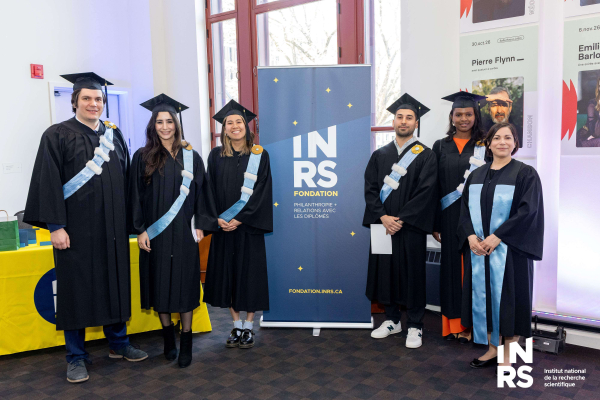
On the occasion of the 2025–2026 convocation ceremony, the INRS Foundation is proud to recognize the outstanding achievements of seven graduating members of the INRS student community, whose research stands out for its excellence, relevance, and contribution to the advancement of knowledge.
Thanks to the generosity of donors within the INRS community, the Awards for Best Master’s and Doctoral Theses highlight master’s and doctoral projects that demonstrate scientific rigour, innovative thinking, and significant impact within their respective fields. Recipients are awarded scholarships of $1,000 at the master’s level and $2,000 at the doctoral level.
The submissions were reviewed by an interdisciplinary committee composed of INRS faculty members. Evaluations focused in particular on the quality of the work, the originality of the proposed approaches, and the reach and influence of the results obtained.
Our 2026 winners are :
Prize for the best master's thesis or essay
Amira Becheikh, Master's degree in Energy and Materials sciences, under the supervision of Professor Andreas Peter Ruediger
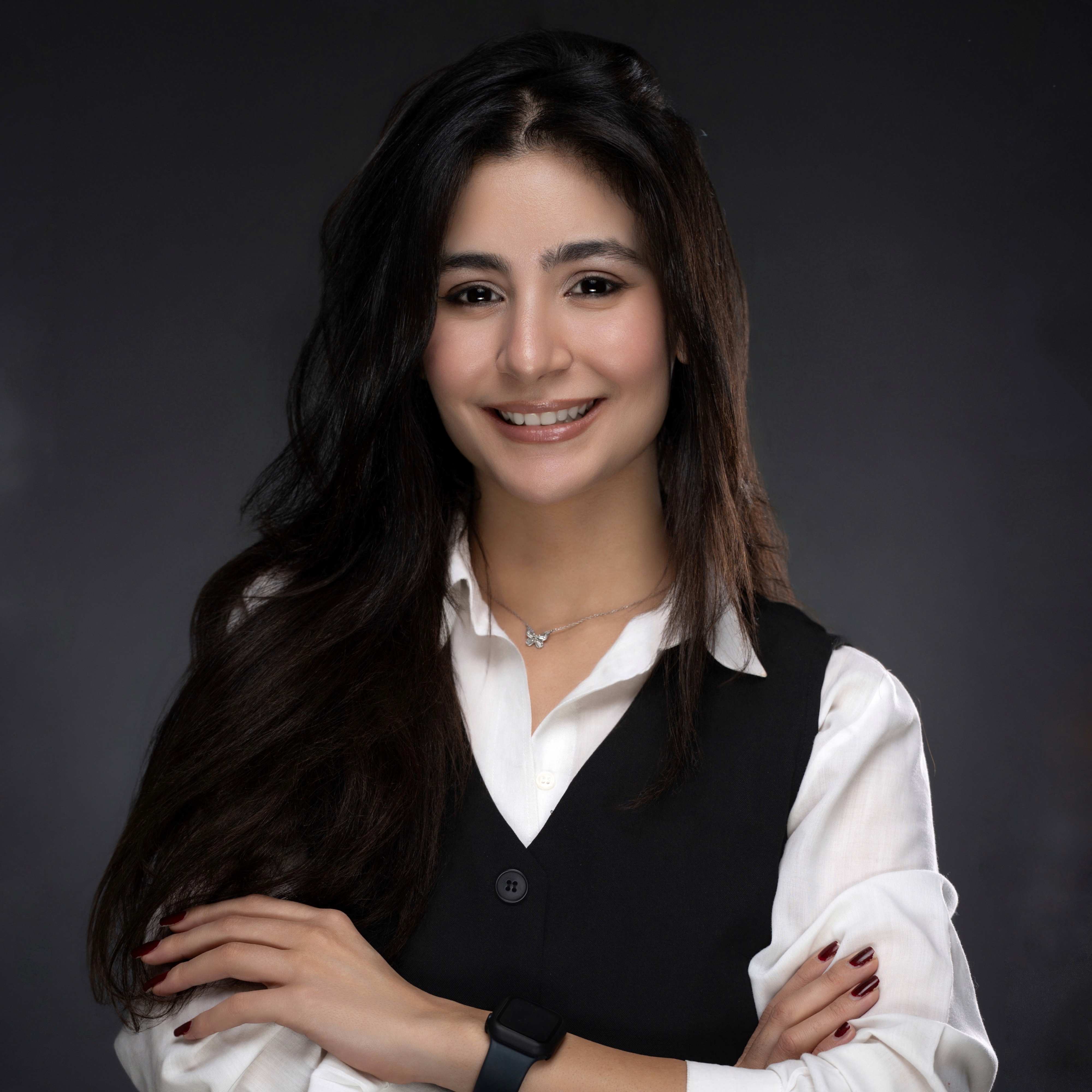
“This award is dedicated to my family, who supported me in all my decisions despite the distance and the thousands of kilometres that separate us.”
- What brought you to INRS? What do you remember about your experience?
My journey at INRS began with a Mitacs Globalink scholarship, which gave me the opportunity to complete a final-year research internship as part of my degree in industrial chemical engineering at INSAT in Tunisia. This first experience was pivotal: it introduced me to the world of research and inspired me to pursue graduate studies at the master’s level.
These two years have been extremely enriching, both scientifically and personally. They allowed me to develop my scientific thinking and put forward my own ideas. Beyond research, this experience also helped me strengthen my science communication skills. Through my role as an INRS ambassador and my participation in numerous events, I had the opportunity to share science with diverse audiences in Montréal and beyond, which has been one of the most memorable aspects of my journey. - Can you describe the challenge and impact of your research project?
My research project focuses on the use of ferroelectric nanoparticles to convert light energy into chemical reactions capable of breaking down particularly persistent pollutants. The goal is to develop more effective and sustainable solutions for treating contaminants found in water, while also gaining a deeper understanding of what occurs within these materials.
Our work explores how certain unique properties of ferroelectric materials can be leveraged to improve decontamination processes. In the long term, this research could contribute to the development of more efficient and less energy-intensive technologies. - What does winning this award mean to you?
Receiving this award represents, above all, a tremendous recognition of the work accomplished over the past two years. This award is also dedicated to my family, who supported me in all my decisions despite the distance and the thousands of kilometres that separate us. I also see it as a recognition of the exceptional support of my research supervisor, Professor Andreas Peter Ruediger, whose guidance, trust, and advice played an essential role throughout my master’s, as well as Professor Alexandre Merlen for his support—not to mention my colleagues. Finally, this award is an additional source of motivation for me to continue pursuing my scientific ambitions. - What's next for you now that you've graduated?
The next chapter has already begun, as I started a doctoral program at INRS this past January. I am continuing my research on energy conversion and ferroelectric materials, with the goal of deepening our understanding of these systems and further exploring their potential for practical applications. I would also like to continue my involvement in science communication to make science more accessible and spark public curiosity.
Hatim Ben Said, Master's degree in Water Sciences, under the supervision of Professor Jacob Stolle
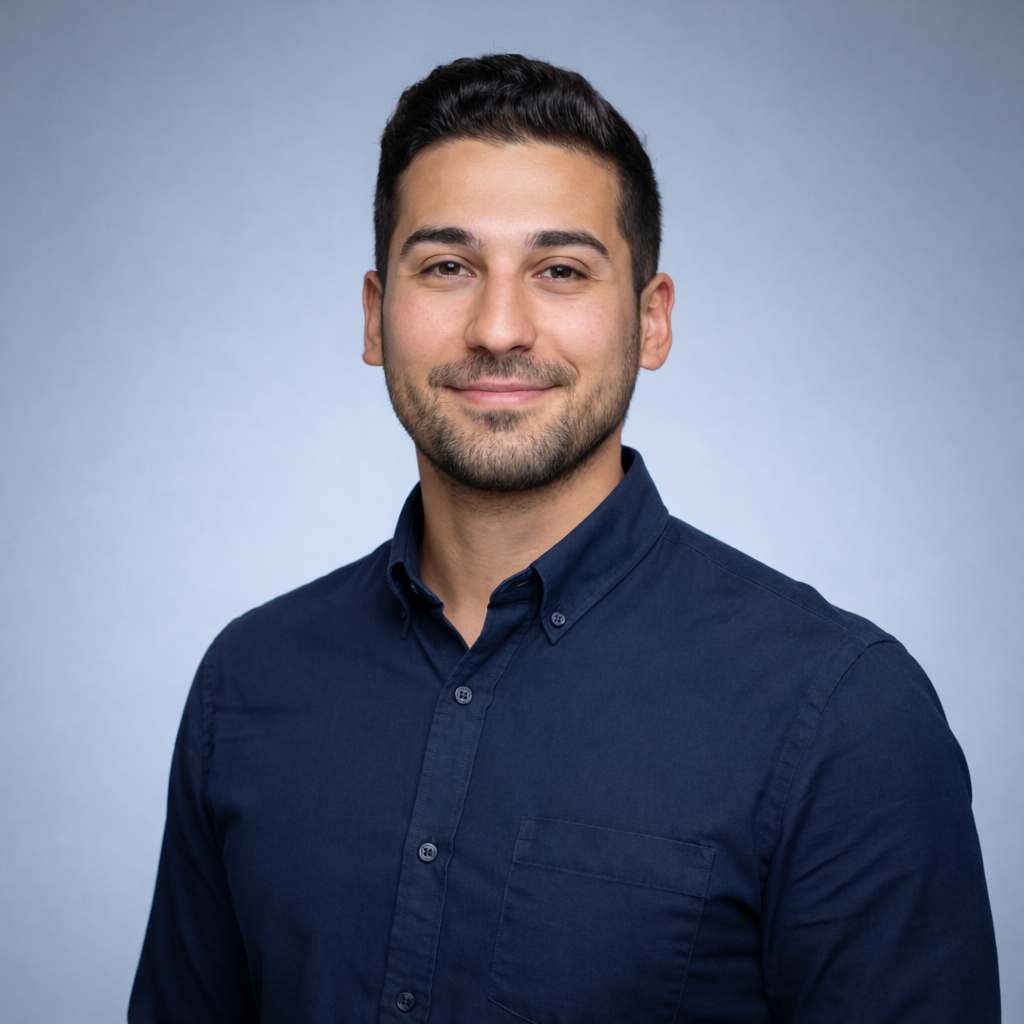
“I am very proud of this award. It recognizes years of hard work in Morocco and Canada.”
- What brought you to INRS? What do you remember about your experience?
I am a civil engineer by training, specializing in hydraulics, with a particular interest in coastal engineering and its impact on communities. I had already begun my professional career in Morocco when I came across an article describing the largest wave flume in North America, located at INRS. That was when I started researching the institution. I was impressed by the quantity and quality of research conducted each year across all INRS centres.
I then contacted my research supervisor, Professor Jacob Stolle, to express my interest in the topics he was working on, particularly coastal erosion and climate change. This marked the beginning of my relationship with INRS. There are many things to take away from my experience at INRS: continuous learning, the importance of independent work and innovation, as well as the value of fieldwork. What stood out to me most was the importance of science communication in transferring knowledge to communities, to young people and adults alike. Truly, the INRS experience is human before it is scientific. - Can you describe the challenge and impact of your research project?
Let us take the example of an Inuit village established along the coast for generations. Beneath its cliffs lies not ordinary ground, but permafrost, a permanently frozen soil whose ice acts as a natural cement holding the shoreline in place. With global warming, the Arctic Ocean remains ice-free for longer each year, storms grow stronger, and waves now directly attack the base of these frozen cliffs. As a result, the coastline is retreating, sometimes by several metres per year. Homes, cabins, cemeteries, and hunting and fishing sites are literally disappearing into the sea.
The challenge is that we cannot yet accurately predict how quickly a given Arctic coastline will retreat, because we still do not fully understand what happens when relatively warm waves encounter frozen ground, unlike in temperate coastal environments. My research project aims precisely to address this gap in the scientific literature.
To better understand this phenomenon, which is difficult to observe directly in the field, a simplified representation of the Arctic was recreated in the laboratory using an artificially frozen soil block, a wave flume, a cooling system, sensors, and controlled experiments.
The main contribution of this work is the development of a reproducible experimental method to isolate the roles of waves, ice content, and heat transfer in the retreat of frozen coastlines. It has also led to the development of a predictive model to estimate the progression of erosion in frozen cliffs. - What does winning this award mean to you?
I am very proud of this award. It recognizes years of hard work in Morocco and Canada. It also honours the sacrifices of my partner, who supported me throughout my journey at INRS. She had to leave her job and her stable life in Morocco to join me in this journey on another continent. I also dedicate this award to my mother, who passed away just two months before the beginning of this journey. She gave me the strength to do my very best to make her proud, after all the efforts she invested in my education. - What's next for you now that you've graduated?
I am currently pursuing my career as a coastal and port engineer with the Québec-based consulting engineering firm Norda Stelo. I work on projects involving coastal protection for communities, as well as strategic infrastructure such as commercial, industrial, and recreational ports. My day-to-day work also includes numerical modelling of waves, helping us better anticipate future conditions and improve the resilience of maritime infrastructure in the face of the many challenges posed by climate change.
I am now returning to the workforce after a two-year period of study at INRS, bringing with me a dual perspective: that of an engineer trained to meet safety standards and deliver practical solutions, and that of a curious scientist driven to innovate, learn, communicate complex ideas, and share knowledge for the benefit of communities.
Kelly Vu, Master's degree in Urban Studies, under the supervision of Professor Stéphane Guimont-Marceau
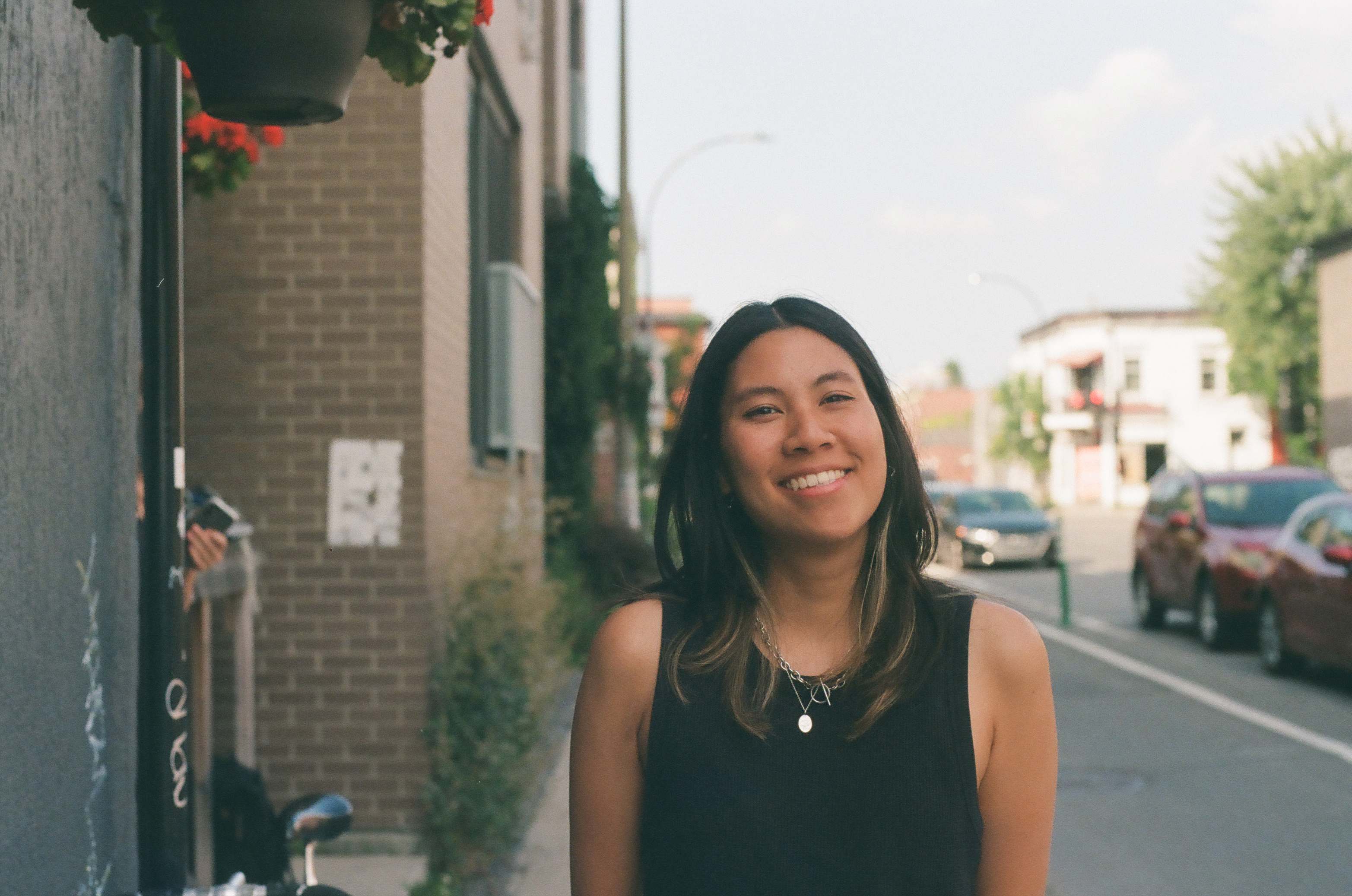
“This award highlights and validates the path I have taken, as well as the relevance of the issues addressed in my research.”
- What brought you to INRS? What do you remember about your experience?
My journey at INRS is part of a return to studies after several years working in the community sector. This field experience led me to deepen my understanding of the urban issues I encountered on a daily basis. For me, research is a way to take action by producing knowledge that is grounded in lived realities.
What I take away from this experience are the many opportunities to participate in research projects and to present my work in a variety of contexts. I even had the chance to present my work internationally. Above all, however, I value the quality of the relationships I developed and the richness of the exchanges I had with fellow students and professors. These interdisciplinary reflections have shaped my path and my approach to urban issues. - Can you describe the challenge and impact of your research project?
My thesis is situated within the context of recent transformations in the Parc-Extension neighbourhood, particularly following the opening of the Université de Montréal’s new science complex in 2019. Through the experiences of racialized youth who live in or frequent the neighbourhood, I sought to better understand the lived effects of gentrification. This research highlights the everyday realities of these young people by valuing their narratives, practices, and relationships to the neighbourhood. It also helps make more tangible the mechanisms of exclusion and the forms of displacement that accompany urban transformation. - What does winning this award mean to you?
Receiving this award represents an important recognition of the work I have accomplished over the past few years. It highlights and validates the path I have taken, as well as the relevance of the issues I address in my research. It is therefore a source of pride and motivation! - What's next for you now that you've graduated?
I would like to continue my professional engagement with issues related to inclusion and civic participation in Montréal. Whether through research, practice, or project development, I hope to keep making a meaningful impact on how diverse populations experience, use, and take ownership of public spaces in the city.
Prize for the best doctoral thesis
Benjamin Crockett, PhD in Energy and Materials sciences, under the supervision of Professor José Azaña
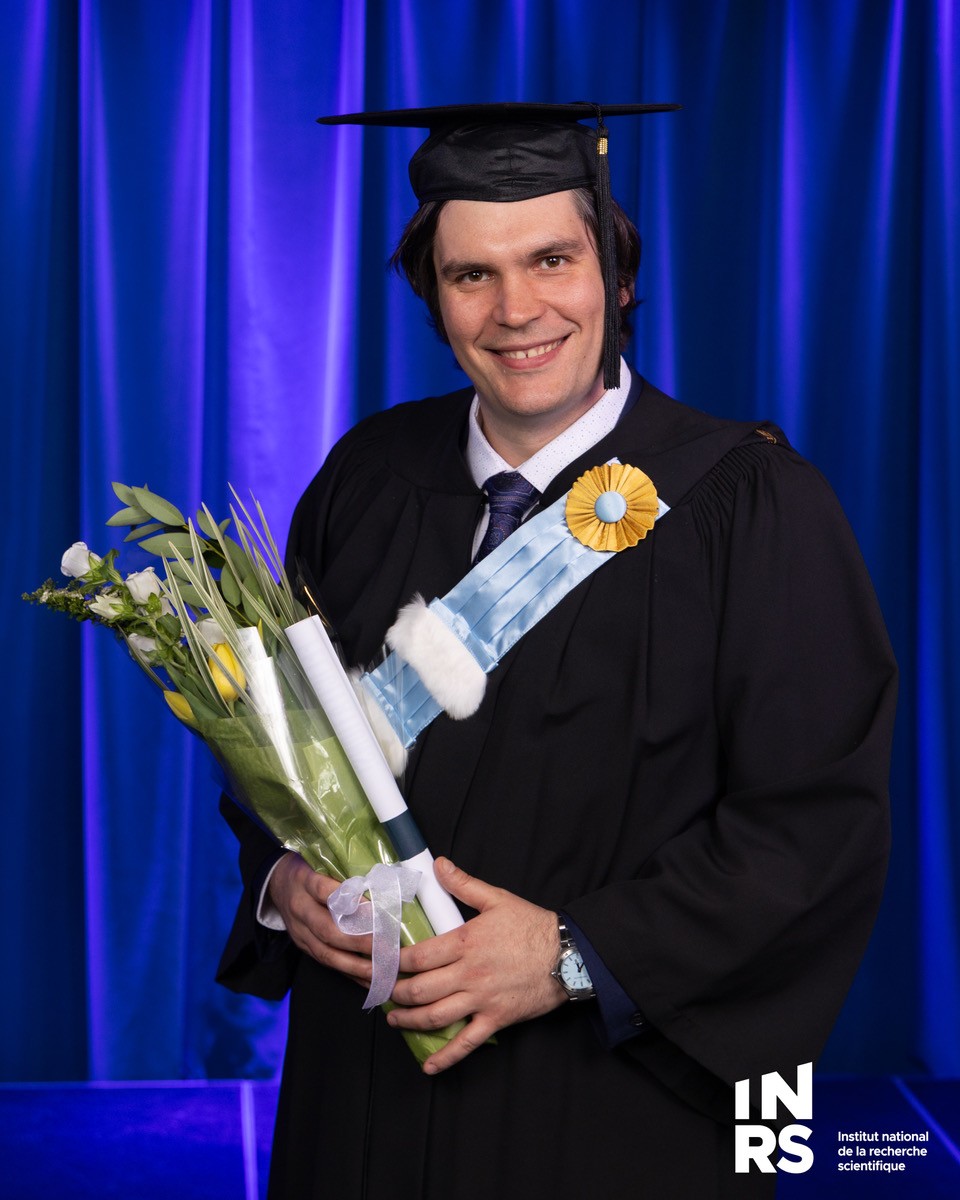
"Receiving this award shows that I have been able to effectively communicate complex concepts studied during my program, while also presenting new ideas that were appreciated by the evaluators."
- What brought you to INRS? What do you remember about your experience?
My path to INRS came somewhat by chance, when my CV made its way from IREQ to the INRS Centre for Energy, Materials and Telecommunications through connections between researchers at these institutions. While I was still completing my undergraduate studies, I had the opportunity to observe the dynamics of José Azaña’s research group during an internship. The team spirit, scientific discussions, and the topic of optical signal processing quickly captured my interest, leading me to pursue graduate studies.
What I will remember most about INRS is its professional, research-focused environment, driven by a commitment to doing things well and to developing a deep understanding. The INRS is an institution with an efficient administration that, in my experience, provides strong support to its students. This setting fosters an environment conducive to research and to stimulating scientific discussions among students and professors alike. - Can you describe the challenge and impact of your research project?
My research focuses primarily on noise reduction and on the time–frequency analysis of both classical and quantum signals. It also seeks to understand how manipulations based on energy redistribution, so far mainly used in classical signal processing, affect the quantum correlations between entangled photons.
In classical optics, signals are generally represented by a one-dimensional function indicating the power of the electromagnetic field as a function of time or frequency. In contrast, quantum correlations between entangled photons are described by a two-dimensional distribution representing the probability of detecting a photon as a function of each photon’s time. This second dimension adds significant richness in the context of optical signal processing. My research aims to better understand how to manipulate these correlations. More specifically, it focuses on reducing the effects of noise and achieving a complete description of quantum states in both time and frequency. To this end, I favour approaches that redistribute energy rather than dissipate it. This approach is essential for energy efficiency and for modern technologies. - What does winning this award mean to you?
This award is a great honour for me, as it recognizes the quality of a completed body of work, unlike other awards that are granted based on the potential of a future project (which, of course, also has great value, but in a different way!). Receiving this award demonstrates that I have been able to effectively communicate relatively complex concepts studied throughout my academic journey, while also presenting new ideas that were appreciated by the evaluators. I hope that my thesis will be read by many students interested in pursuing these research directions in the future. - What's next for you now that you've graduated?
I am currently completing my postdoctoral studies at the University of British Columbia. While my doctoral research focused on using commercial devices to demonstrate a new way of manipulating classical and quantum signals, my current work centres on the development of new platforms and photonic integrated circuits on small semiconductor chips. My goal is to work at the interface of science and engineering to develop new technologies with commercial applications in communications, computing, and sensing. Ultimately, I aim to establish my own research group that can develop new techniques, both in terms of conceptual design and technical implementation.
Ilias Hani, PhD in water sciences, under the supervision of Professor André St-Hilaire
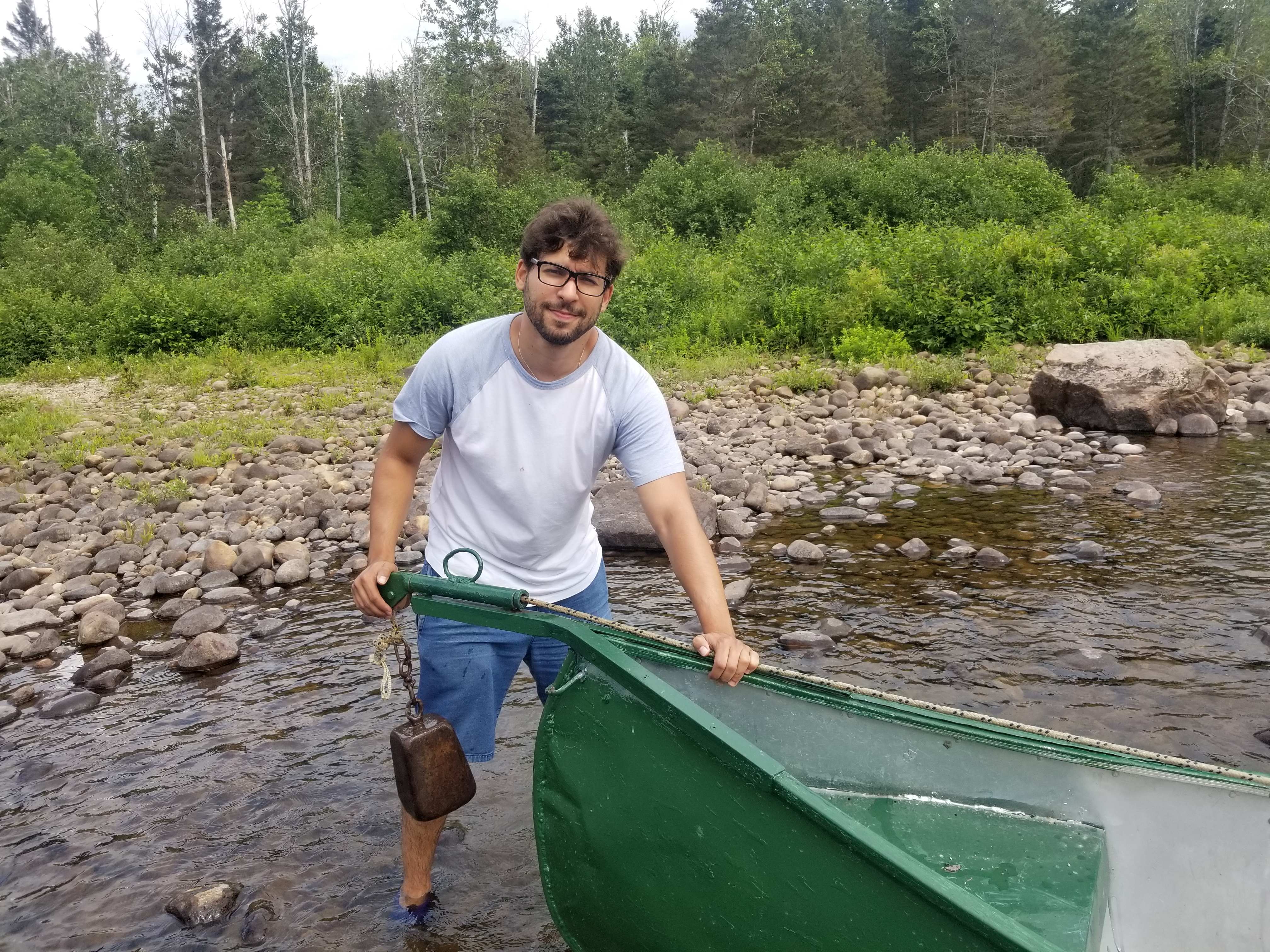
"Receiving the Award for the best thesis is a great source of pride for me and marks the culmination of five years of hard work at the master’s and doctoral levels."
- What brought you to INRS? What do you remember about your experience?
I received an INRS excellence scholarship, which gave me the opportunity to complete a summer internship with Professor André St-Hilaire’s team. I was warmly welcomed and quickly immersed in the world of research. This experience showed me how mathematical modelling can be used to better understand the hydrological and thermal dynamics of rivers, and thus contribute to the protection of Atlantic salmon habitats, an emblematic species in eastern Canada with significant ecological, economic, and sociocultural value. - Can you describe the challenge and impact of your research project?
I then continued on to a master’s degree, followed by a PhD, under the supervision of Professors André St-Hilaire and Taha Ouarda. My work initially focused on estimating potential thermal refuge areas in the Sainte-Marguerite River in the Saguenay region, a true natural laboratory for studying Atlantic salmon habitat. Using innovative artificial intelligence approaches, I sought to better identify areas that could provide favourable thermal conditions for salmon during warm periods.
During my doctoral studies, I expanded this work to a much larger scale, focusing on modelling hydrological and thermal conditions in salmon rivers across eastern North America, from the state of Maine to Ungava Bay in northern Québec.The objective of my research is to better understand the effects of climate change on the thermal habitat of Atlantic salmon and to support decision-making related to the conservation of this species. The models developed have attracted the interest of several organizations and government agencies, allowing me to see the tangible impact of my work and the value of the training provided at INRS. - What does winning this award mean to you?
Receiving the Award for Best Thesis is a great source of pride for me and marks the culmination of five years of hard work at the master’s and doctoral levels. I am deeply grateful to my supervisors for their exemplary guidance, their trust, and their great scientific generosity. This award also reflects the quality of the training at the INRS Centre Eau Terre Environnement and the impact of its research. Throughout my academic journey, I have had the opportunity to present my results at several conferences in Canada and Italy, and I will soon be presenting them in Victoria Falls, Zimbabwe, at the 15th International Workshop on Statistical Hydrology (STAHY). - What's next for you now that you've graduated?
I am currently a postdoctoral researcher in a joint project between INRS and Université Laval. I am continuing my work on modelling Atlantic salmon habitat, with a particular focus on rivers regulated by dams, in order to study the effects of spillways on river water temperature.
Flandrine Lusson, PhD in Urban Studies, under the supervision of Professor Sandra Breux
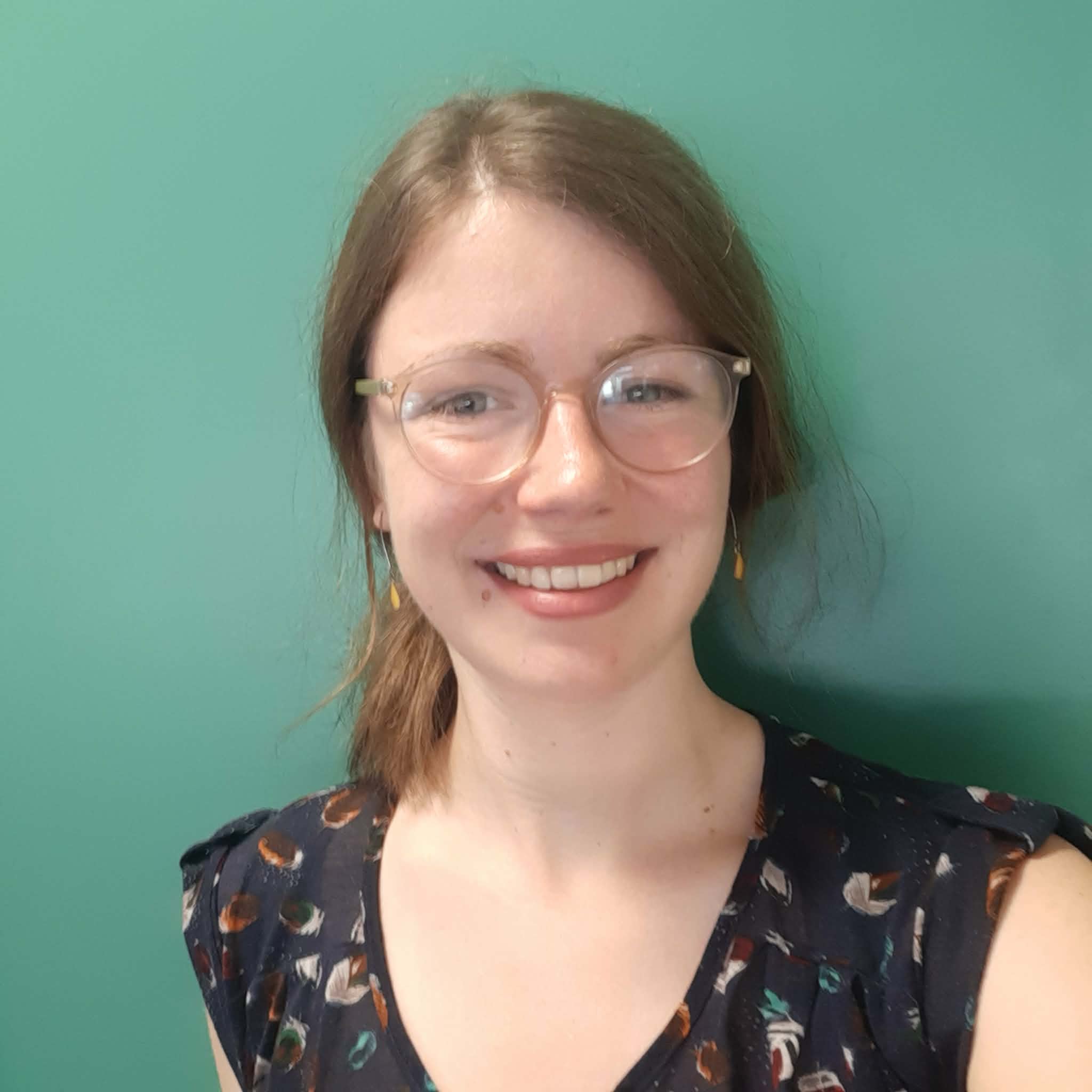
"Receiving this award is both a recognition of the research work carried out over four years and of the scientific and societal relevance of the topic addressed."
- What brought you to INRS? What do you remember about your experience?
After completing a master’s degree in urban and environmental sociology at the University of Strasbourg (France), I wanted to continue pursuing a career in research. Having already completed a year of study at UQAC, I returned to Québec to carry out my final internship at the Institut du Nouveau Monde (INM) as a project officer in public participation. At the time, I was interested in examining the power dynamics that can emerge in the implementation of land-use planning projects. I met Sandra Breux, a professor of political science and specialist in municipal democracy at INRS, who agreed to support my application to the PhD program in urban studies at INRS. Seeking to conduct research grounded in a Québec territorial issue, I explored media coverage and discovered the case of Mirabel, a territory historically shaped by expropriation that has since become one of the fastest-growing municipalities in Québec in terms of both population and economic development.
From my doctoral experience, I retain the strong support and high-quality mentorship provided by the faculty. The INRS trains us to become researchers. Its professors give us the opportunity to work on a wide range of topics and research projects, allowing us to build recognized expertise that helps distinguish us in the job market. The reputation of INRS enables us to produce research with strong social resonance, which, in my view, is the ultimate goal of all research in the social sciences. I would not have had the same working conditions elsewhere, nor the same social impact in my research. - Can you describe the challenge and impact of your research project?
My thesis examined the memory of the long-term impacts of expropriation on the construction of territorial identities. Addressing the sensitive issue of expropriation, my research is part of an ongoing process of collective memory led by the expropriated residents of Mirabel. By analyzing the social, spatial, economic, and political impacts of the airport project initiated in the 1970s, it helped document and bring visibility to diverse lived experiences, as well as to the lasting effects of this expropriation. In 1969, INRS, then newly established, was mandated to produce a report on the expected impacts of the future airport on regional development in the north of Montréal. It is striking that, 56 years later, my thesis seeks to describe the consequences of this history and this project. My research has had a local impact by producing objective data on the reality of a territory where the airport site still exists despite its closure. It also situates the case of Mirabel within broader contexts by drawing connections with other historical and more recent expropriations. More broadly, I hope it contributes to recognizing that expropriation affects not only individuals but entire territories, and that existing mechanisms to mitigate its effects are insufficient to fully acknowledge the impacts experienced by the territories and the communities that inhabit them. - What does winning this award mean to you?
Receiving this award is both a recognition of the research work carried out over four years and of the scientific and social relevance of the topic addressed. Studies on the long-term effects of expropriation in Western countries remain limited and call for further in-depth research to more fully incorporate a social perspective into land-use planning and project implementation practices. - What's next for you now that you've graduated?
Since October 1, 2025, I have been a postdoctoral researcher with the Participations, Mediation, and Citizen Transition Chair at the University of La Rochelle (France). Within this chair, I hold several roles: I serve as a project coordinator for science-society initiatives and as a researcher. My research builds on my doctoral work by focusing more specifically on the memories of collective struggles related to land-use planning projects. I am involved in collecting and analyzing these memories, their meanings, and their legacies. I am currently working on three projects: an analysis of the memory of a conflict related to a local agricultural methanization project; the collection and analysis of memories linked to the defence and protection of the Charente River (France); and a comparative study of memory work conducted by groups mobilized against Large-Scale Unnecessary and Imposed Projects (GPII). My postdoctoral fellowship will conclude in September 2027, and starting next year, I will be submitting applications for positions as a Maître de conférences (associate professor) and as a CNRS research scientist in France.
Aïssatou Aïcha Sow, PhD in Virology and Immunology, under the supervision of Professor Laurent Chatel-Chaix
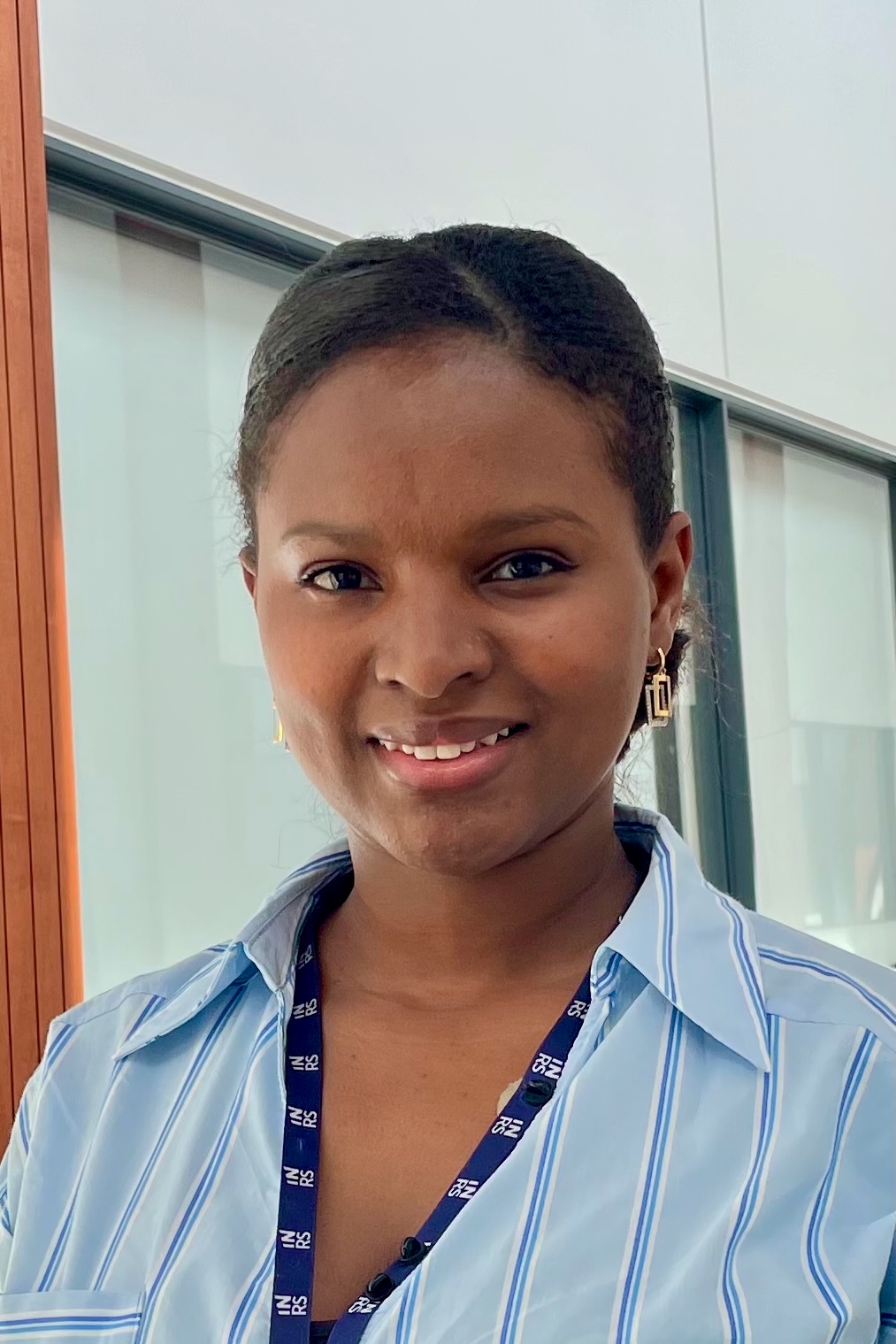
“I am deeply honoured to receive this award, which marks the culmination of several years of study. As my academic path has not been linear, this recognition is especially meaningful to me and reminds me how fortunate I have been to be surrounded by extraordinary people throughout my doctoral journey.”
- What brought you to INRS? What do you remember about your experience?
During my master’s degree, I completed an internship abroad. It focused on the diagnosis of infections caused by viruses of the Orthoflavivirus genus, and more specifically by Zika and dengue viruses. This experience motivated me to go further and better understand the molecular mechanisms involved in viral infection. Upon returning to Montréal, I looked for a laboratory working on these viruses and came across Professor Chatel-Chaix’s lab. I first joined as an intern before continuing there for my doctoral studies.
I truly thrived during my PhD. I learned a great deal, both scientifically and personally. What I take away from my time at INRS is a supportive environment where innovative projects and engagement are valued. My experience at INRS has undoubtedly shaped me not only as a researcher, but also as a citizen. - Can you describe the challenge and impact of your research project?
I completed my PhD under the supervision of Professors Laurent Chatel-Chaix and Kessen Patten at the Armand-Frappier Santé Biotechnologie Centre (AFSB), where I focused on Zika virus pathogenesis and the development of new antivirals. A central component of my work involved developing a new model of Zika virus infection using zebrafish to study viral neuropathogenesis.
By combining transcriptomics, microscopy, and the use of transgenic lines, I demonstrated that infection in zebrafish embryos reproduces key features observed in children infected in utero, including reduced head size and depletion of neuronal progenitor cells. I also identified both cellular and viral factors involved in the neurological defects caused by the Zika virus. The disruptions in neural networks observed in our model provide, for the first time, insights into the mechanisms underlying the epileptic seizures observed in some affected children. Finally, I showed that the viral protein NS4A plays a key role in neuropathogenesis, thereby opening new therapeutic avenues.
In a second part of my thesis, I identified two antiviral compounds: N-phenylpyridine-3-carboxamide (NPP3C), which is active against Zika and dengue viruses, and 6-acetyl-1H-indazole (6A1HI), which is specific to dengue virus. - What does winning this award mean to you?
I am deeply honoured to receive this award, which marks the culmination of several years of study. As my academic path has not been linear, this recognition is especially meaningful to me and reminds me how fortunate I have been to be surrounded by extraordinary people throughout my doctoral journey. I would like to thank my former laboratory colleagues and the members of the Armand-Frappier Santé Biotechnologie Centre. I would also like to extend my sincere gratitude to my research supervisors. Thank you! - What's next for you now that you've graduated?
I am currently a postdoctoral researcher at the Institut Pasteur in Paris, where I continue to study the Zika virus. My research aims to better understand the factors that determine its virulence in neural progenitor cells, as well as its transmissibility in mosquitoes.
The INRS Foundation warmly congratulates the winners on their remarkable careers, and the research teams who have supported them along the way.